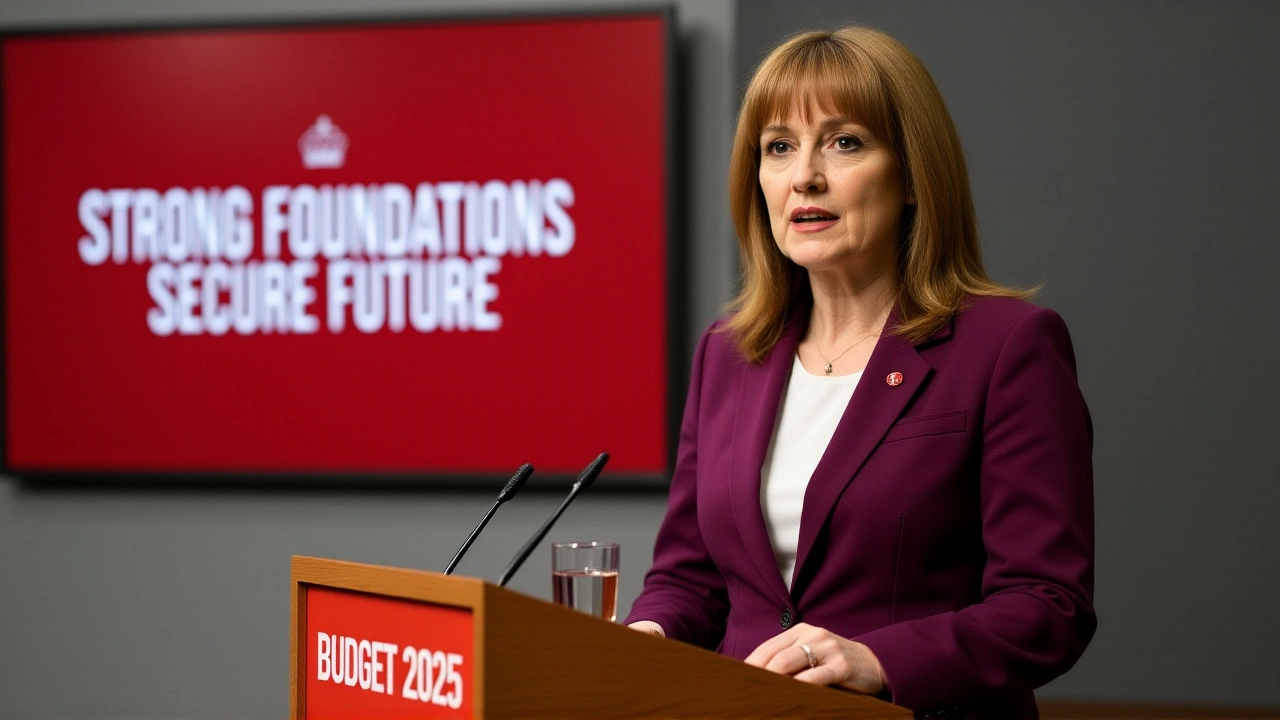
When Rachel Reeves stepped up to the despatch box in the House of Commons at 12:30pm UTC on Wednesday, November 26, 2025, the room fell silent—not out of respect, but disbelief. The Chancellor of the Exchequer had just announced a raft of tax rises to plug a £30 billion gap in public finances, shattering her own promise from last year that no further increases were coming. It wasn’t just another budget. It was a reckoning. And for millions of British households, it felt personal.
The Unspoken Promise Broken
Last November, just after Labour took power, Reeves had declared: "We’ve had enough of austerity. We’ve had enough of reckless borrowing." She even took a direct swipe at former Conservative PM Liz Truss, distancing her government from the chaos of 2022. But now, with inflation still hovering above 3% and public debt at 98% of GDP, the numbers had become impossible to ignore. The Institute for Government, a respected non-partisan think tank based in London, had warned months earlier that the £30bn shortfall couldn’t be closed without either deep spending cuts or new taxes. Reeves chose the latter.And the most painful blow? The extension of the income tax threshold freeze—now locked in until 2030. That means, as wages creep up with inflation, more people will be dragged into the 40% and even 45% tax brackets without ever getting a pay rise that keeps pace. In 2024, 2.8 million people were pushed into higher bands due to the freeze. This year, that number is expected to jump to 4.1 million. It’s not a tax rise on paper. It’s a stealth tax in practice.
Who Pays? The New Tax Targets
The budget didn’t just rely on bracket creep. It came with a checklist of targeted levies:- Property taxes: A new 2% surcharge on residential properties valued over £2 million, affecting around 120,000 homes nationwide.
- Electric vehicle fees: A pay-per-mile charge of 5p per mile for EVs, starting in April 2026—designed to offset lost fuel duty revenue as petrol cars fade.
- Gambling levies: A 25% increase in the duty on online betting, expected to raise £800 million annually.
- Salary sacrifice caps: A £10,000 annual cap on tax-free benefits like pensions, childcare vouchers, and cycle-to-work schemes.
"It’s not about punishing EV drivers," Reeves said during her speech. "It’s about fairness. If you’re driving a £70,000 Tesla, you’re not paying your fair share of road maintenance. And if you’re using your company car to avoid £5,000 in income tax, that’s not a perk—it’s a loophole."
The Opposition Fires Back
Sir Mel Stride, the Shadow Chancellor, didn’t waste time. "She promised us a clean slate," he told reporters outside Parliament. "She said she’d wiped the slate clean after £40 billion in tax hikes under her predecessor. Now she’s back with another £30 billion. That’s not fiscal responsibility. That’s broken trust." His comments echoed the frustration of middle-income families who’d believed Labour’s message: "We’re the party of fairness." But fairness, as Reeves framed it, meant asking those who could afford it to pay more—whether through property, EVs, or benefits. "We’re not raising taxes on hardworking people," she insisted. "We’re closing loopholes that let the wealthy avoid their responsibilities."What This Means for You
For a teacher earning £38,000 in Manchester, the freeze means an extra £217 in income tax this year. For a nurse in Birmingham on £42,000, it’s £340. A self-employed graphic designer using salary sacrifice to fund childcare? They’ll lose up to £1,200 in tax relief. And if you own a £2.5 million home in Surrey? You’re now paying an extra £5,000 a year in property tax.Meanwhile, the government claims the revenue will fund a £15 billion boost to the National Health Service—aimed at cutting waiting lists—and £8 billion for skills training and infrastructure. But critics point out: £30 billion in new taxes to fund £23 billion in spending? That still leaves a £7 billion hole.
The Long Game: Growth or Grind?
Reeves is betting on "the biggest drive for growth in a generation." She’s pouring money into green energy hubs, rail upgrades, and digital skills academies in cities like Manchester, Birmingham, and Cardiff. The hope? That economic growth will eventually outpace the tax burden, reducing the deficit over time.But history isn’t kind to such bets. The 2010-2015 coalition government tried similar tactics—tax hikes paired with infrastructure spending—and saw growth stall for years. The Institute for Government warns that without productivity gains, tax rises alone won’t fix the public finances. "This isn’t a plan," one senior analyst told Sky News. "It’s a holding pattern."
What’s Next?
The immediate measures—like the EV charge and gambling duty—kick in by April 2026. The income tax freeze lasts until 2030. By then, the government hopes to have reduced the national debt to 90% of GDP. But if inflation returns or growth stalls, another round of tax adjustments may be inevitable.What’s clear? The politics of fairness are shifting. Voters may not like these hikes—but they may tolerate them if they see hospitals getting faster, trains running on time, and apprenticeships actually leading to jobs. The real test isn’t in the budget document. It’s in the waiting rooms, the classrooms, and the charging stations.
Frequently Asked Questions
How will the income tax threshold freeze affect my take-home pay?
If you earn between £37,500 and £125,140, you’re in the 40% tax bracket. Because the threshold hasn’t risen since 2021, inflation has pushed more earners into this bracket. By 2028, an additional 4.1 million people will pay higher rates without a single pay rise. For someone earning £40,000, that’s an extra £300–£400 in tax annually.
Why tax electric vehicles if they’re supposed to be good for the environment?
Electric vehicles don’t pay fuel duty, which funds road maintenance. With over 2.5 million EVs on UK roads and growing, the government lost £1.8 billion in 2024 alone. The 5p-per-mile charge targets high-mileage drivers—especially those in expensive EVs—while exempting low-income users under 5,000 miles/year. It’s not anti-EV; it’s about replacing lost revenue fairly.
Who exactly is being targeted by the property tax surcharge?
Only homes valued over £2 million face the new 2% surcharge—roughly 120,000 properties, mostly in London, the Home Counties, and parts of Scotland. The average homeowner pays nothing. The tax applies to the value above £2 million, so a £2.5 million home pays £10,000 annually. Revenue will go to local councils for housing and infrastructure.
Is this budget really fair, or just politically convenient?
It’s both. The tax hikes avoid hitting low-income households directly, which aligns with Labour’s values. But they’re concentrated on middle- and upper-middle earners—teachers, nurses, small business owners—who’ve seen little real wage growth. Critics call it "targeted pain." Supporters say it’s "shared responsibility." The truth? Fairness is subjective. What’s certain: this budget won’t be popular, but it might be necessary.
What happens if the economy doesn’t grow as projected?
If growth stays below 1.5% for two consecutive years, the Office for Budget Responsibility (OBR) will trigger a review. That could mean further tax adjustments, spending cuts, or even a temporary borrowing increase. The government’s plan assumes 2.3% annual growth through 2030. That’s optimistic. Historical averages since 2010 are closer to 1.4%.
How does this compare to previous Labour budgets?
The 2010 Labour budget under Gordon Brown raised income tax by 1% across all bands. This one doesn’t raise rates—it expands the tax base. It’s more like Tony Blair’s 2000s approach: targeted levies on wealth and consumption, not broad-based hikes. But unlike Blair, Reeves is doing this amid record public debt and low productivity—a much tougher environment.